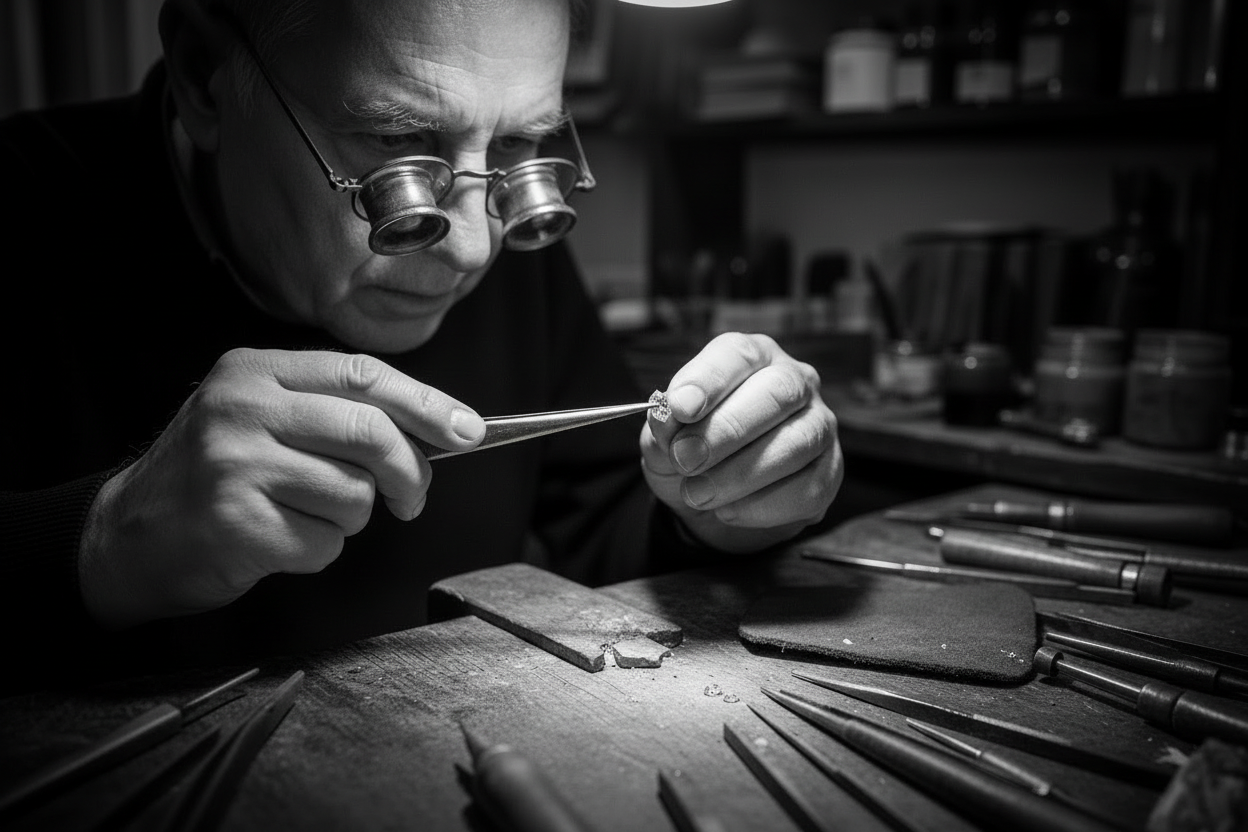
Old European mine diamonds, also known as Old European cut diamonds, represent a crucial chapter in the history of diamond cutting. These antique gems were crafted long before the precision of modern machinery, using techniques rooted in artistry, patience, and tradition. Popular from the mid-1800s through the early 1900s, they are known for their distinctive charm and romantic sparkle that reflects the warmth of candlelight.
At kellykdiamonds, we honor this historic craftsmanship by sourcing authentic Old European cut diamonds and showcasing them in both ready-to-ship and custom-designed pieces.
Key Features of the Old European Cut
-
High Crown: This raised top section adds height and a rich, vintage profile to the diamond.
-
Small Table: A reduced table facet (the flat surface on the top) allows for broader, less concentrated light reflection, producing a soft, warm glow.
-
Open Culet: A flat or slightly pointed bottom facet that allows light to escape, contributing to a mellow brilliance and distinct antique look.
-
Chunky Facets: These large, hand-cut facets give the diamond a more dramatic appearance in changing light.
-
Circular Girdle Outline: Unlike the symmetrical outlines of modern brilliants, Old European cuts often display charming, slightly irregular rounds that emphasize their handcrafted nature.
The Diamond Cutting Process: Then vs. Now
In the 19th and early 20th centuries, diamond cutting was a fully manual process. Cutters used tools like bow-driven cutting wheels, hand-operated lathes, and wooden dops to hold the stone in place. Without electric-powered machinery, achieving symmetry or mathematical precision wasn’t the goal—instead, cutters aimed to preserve carat weight and maximize inner fire.
Step-by-Step Glimpse at the Process:
-
Marking the Rough: A master cutter would study the rough diamond under natural or candlelight and use a hand-drawn ink mark to indicate how the stone would be cleaved. This decision considered both beauty and yield.
-
Cleaving or Sawing: The diamond was cleaved along its natural crystal grain using a simple steel blade and a sharp strike. If sawing was needed, a bow saw with diamond dust might be used, but it was a painstaking process.
-
Bruting: The diamond was shaped into a round outline through a process called bruting, which involved grinding one diamond against another. This established the stone’s basic silhouette.
-
Faceting: Large, flat facets were hand-cut into the stone using a spinning wheel called a scaife, coated with a diamond dust paste. Each facet was placed by eye, resulting in unique proportions and often slightly off-center tables or culets.
-
Polishing: Final polish was achieved by further refining the facets on the scaife. Since this was done manually, it took hours—sometimes days—for a single diamond.
The lack of electric lighting meant that all decisions were made under soft ambient light. This is why Old European cuts were optimized for low-light environments, producing a gentle, romantic glow rather than the intense sparkle of today’s modern brilliants.
Why Collectors Love Old European Cuts
Every Old European cut diamond is a small piece of history—an heirloom passed down through time. Because of their handcrafted nature, no two are exactly alike. Their flaws are their signature. At kellykdiamonds, we find these subtle imperfections to be part of the magic.
These diamonds are ideal for those who value uniqueness, sustainability, and timeless elegance. Whether set in platinum or yellow gold, in a solitaire or halo setting, an Old European cut makes a profound statement: refined, rare, and rich with character.
Bring the Past to Life
kellykdiamonds proudly offers antique and vintage-inspired engagement rings that feature authentic Old European cut diamonds. Whether you’re searching for a romantic heirloom piece or commissioning a custom design, our expert team will help you find or create the perfect ring that bridges past and present.